10 Speed Drawing Tips to Win More Doodle Duels
Master the art of speed sketching with these proven tactics. Learn how to draw faster, score higher, and dominate the leaderboards in Doodle Duel.
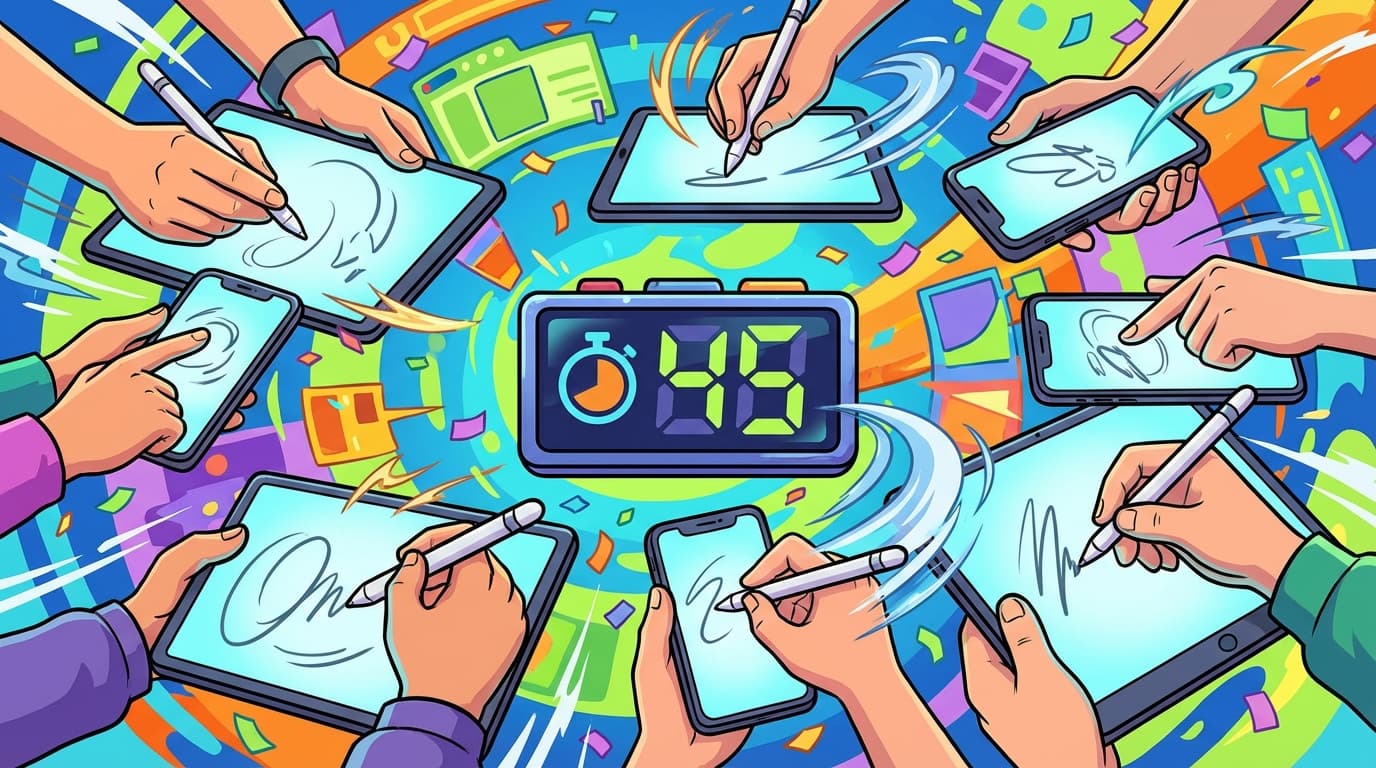
You see the prompt: "Draw a bicycle." The timer starts. 45 seconds. Your mind races — where do you even start? Before you know it, you've wasted 15 seconds thinking and your opponent is already halfway done.
Sound familiar? If you've played Doodle Duel and felt that panic when the countdown begins, you're not alone. Speed drawing isn't just about having artistic talent — it's about strategy, muscle memory, and knowing exactly what to prioritize when every second counts.
After analyzing thousands of high-scoring drawings and talking to top players on our leaderboards, we've identified the tactics that separate winners from everyone else. Here are 10 proven tips to help you draw faster and score higher.
1. Master the "Silhouette First" Rule
The single most important technique in speed drawing: always sketch the overall shape first. If you're drawing a car, outline the basic body before adding wheels. Drawing a person? Get the head-body-limbs proportions down before worrying about facial features.
Why? Because the AI needs to recognize what you drew before it can evaluate how well you drew it. A perfect headlight on an unrecognizable blob won't save your score. But a clear car silhouette with basic wheels? That's already a decent score, and you have time left for details.
2. Build a Mental Library of Simple Shapes
Every complex object breaks down into circles, rectangles, triangles, and ovals. A house is a rectangle + triangle. A cat is two circles (head and body) + triangles (ears) + a curved line (tail).
Practice deconstructing common prompts into these building blocks. When you see "elephant," your hand should automatically move to draw a large oval (body) + smaller circle (head) + rectangles (legs) without conscious thought. This saves precious mental processing time.
3. Use the Entire Canvas
Small, timid sketches crammed in the corner score lower. The AI's computer vision works better when your drawing fills the canvas appropriately. Think of it like presenting your work — make it prominent, centered, and easy to evaluate at a glance.
A good rule: your main subject should take up 50-70% of the canvas. Not so large it's cropped, but big enough to be the clear focal point.
4. Practice Your "Greatest Hits"
Certain prompts appear frequently: animals (dog, cat, bird), vehicles (car, bike), household objects (chair, cup), food items (pizza, apple). Spend 5 minutes before a session sketching your go-to versions of these common prompts.
Develop a "standard" way to draw each one. Consistency matters more than perfection. If you can crank out your signature cat in 20 seconds every time, you'll have 25 seconds left for refinement.
5. Add the "Big Three" Details
After your silhouette is solid, you usually have time for 3-4 key details. Choose the most recognizable features — what makes this object obviously what it is?
- Drawing a dog? Add floppy ears, a wagging tail, and a collar
- Drawing a house? Add a door, windows, and a chimney
- Drawing a bicycle? Add handlebars, a seat, and spokes in the wheels
Ignore less critical details. A dog doesn't need individually drawn toes. A house doesn't need roof shingles. Focus on what makes instant visual sense.
6. Train Your Hand Speed in Solo Mode
Before competing, sharpen your reflexes in Solo Mode. The Arcade mode is perfect for this — 50 progressive levels that train you to draw under pressure without the stress of live competition.
Treat it like an athlete doing drills. Draw the same prompt 5 times in a row, trying to shave off seconds each time. Your goal: muscle memory so automatic that your hand knows where to go before your brain finishes thinking.
7. Study the Winners
When you lose a round, look at what the winner drew. Often, the highest-scoring drawing isn't the most artistically impressive — it's the one that balanced speed, clarity, and just enough detail. Pay attention to how they structured their sketch and what details they prioritized.
You'll notice patterns: winning drawings tend to be bold, clear, and instantly readable even as thumbnail images. That's your target.
8. Don't Overthink the Prompt
When you see "butterfly," don't spend 10 seconds deciding which species to draw. Draw the most generic, recognizable version you can imagine. Overthinking burns time and adds pressure.
The prompt "pizza"? Draw a circle with triangular slices and pepperoni dots. Don't worry about whether it should be deep dish or thin crust. Clear and fast beats perfect every time.
9. Accept Imperfect Lines
Your lines will wobble. Your circles won't be perfect. Your proportions will be slightly off. That's okay. Perfectionism is the enemy of speed. The AI doesn't expect museum-quality art — it expects recognizable sketches made under intense time pressure.
If a line is 80% good, move on. Redrawing a line you're not happy with can cost you 5-8 seconds — time better spent adding a detail that actually improves your score.
10. Manage Your Timer Awareness
Glance at the timer, but don't fixate on it. A good rhythm:
- 0-15 seconds: Silhouette and basic structure
- 15-35 seconds: Key recognizable details
- 35-45 seconds: Final refinements if time allows
If you hit 35 seconds and your drawing is recognizable, stop. Adding nervous last-second scribbles often hurts more than helps. A clean, simple, finished-looking sketch scores better than a cluttered one.
Bonus: Warm Up Your Drawing Hand
Before a session, spend 2 minutes loosening up. Draw quick circles, lines, and zigzags. Get the blood flowing to your fingers. It sounds silly, but cold, stiff hands are slow hands. Athletes warm up — so should speed sketchers.
The Real Secret: Consistency Over Complexity
The difference between good Doodle Duel players and great ones isn't artistic talent. It's consistency. Great players can produce a recognizable drawing of anything in under 30 seconds because they've internalized these principles.
They don't try to impress with detail — they aim for instant clarity. They don't chase perfection — they chase speed + recognition. And most importantly, they practice enough that their hand moves on autopilot while their brain stays calm.
Ready to put these tips into action? Jump into a duel now and see how much faster you can sketch. With practice, you'll be climbing the leaderboards in no time.
And remember: even the top players started as beginners. Every expert was once someone who panicked at the 45-second timer. The difference? They kept playing, kept learning, and kept getting faster.
Your turn. Go duel.
Enjoyed this article?
Ready to Draw?
Put your skills to the test in a real-time drawing duel. No sign-up needed!
Related Articles

How AI Judges Your Drawings: Inside Doodle Duel's Smart Scoring System
Doodle Duel uses cutting-edge AI to evaluate your drawings in real-time. But how does a computer decide if your sketch of a dog actually looks like a dog? We pull back the curtain on our scoring system and share insider tips to help you climb the leaderboards.
Read more
7 Reasons Browser Games Are Perfect for Game Night (No Downloads Required)
Tired of waiting for game downloads and dealing with compatibility issues? Browser games offer instant multiplayer fun with zero friction. Here's why they're becoming the go-to choice for game nights with friends.
Read more
How to Host the Perfect Game Night with Doodle Duel
Game nights are back, and Doodle Duel is the perfect centerpiece. Whether you're hosting friends in person or connecting remotely, here's your complete guide to creating an unforgettable drawing duel experience.
Read more